
sector outreach” to “close off Iran’s access to the international financial system”.
What effect did the dollar shortage have in Iran?
In January, the Iranian rial was trading at 1.5 million to the dollar – a sharp decline from about 700,000 a year earlier in January 2025 and about 900,000 in mid-2025. The plummeting currency triggered steep inflation, with food prices an average of 72 percent higher than last year.
In 2018, during his first presidency, Trump withdrew from the 2015 Joint Comprehensive Plan of Action, a deal between Iran and global powers limiting Tehran’s nuclear programme in return for sanctions relief.
Since re-election last January, President Trump has doubled down on his so-called “maximum pressure” to cripple Iran’s economy and corner Tehran to renegotiate its nuclear and regional policies. Last month, Trump threatened a 25 percent tariff on countries doing business with Iran.
Through the rigorous blocking of Iran from the global financial system by creating a dollar shortage, the US pushed Tehran towards a severe “import compression, [and as a result, Iran] cannot pay for the intermediate goods and machinery required for domestic production”, said Farzanegan, the economist.
The US strategy, he said, “is particularly devastating because it leverages commercial risk management against humanitarian needs”. In short, Washington’s strategy “makes the small Iranian market a commercial liability” for any company, even if they are only dealing with medicine, for instance, Farzanegan added.
A research paper published by Farzanegan and Iranian American economist Nader Habibi last year found that the size of Iran’s middle class would have expanded by an annual average of approximately 17 percentage points, between 2012 and 2019, if it were not for US action.
In 2019, the estimated size of loss in the middle-class share of the population in Iran was 28 percentage points, the research found.
“People lost their purchasing power, and savings were wiped out,” the economist told Al Jazeera. “This is a long-term destruction of the country’s human capital.”
Besides the US action is the existing vulnerability of Iran’s economic structure, with factors like long-term mismanagement, high rates of corruption and over-reliance on oil revenues making it fragile.
While the US sanctions created external shock, a lack of domestic structural reforms left the government with “no fiscal space to cushion the blow”.
What is the US’s endgame here – and will it succeed?
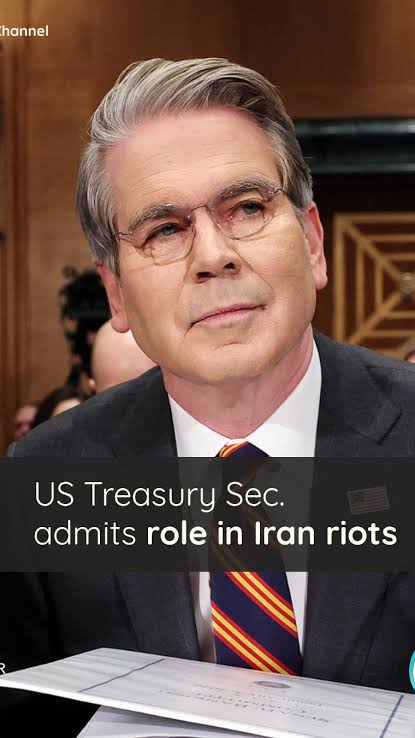
Bessent’s admission that Washington deliberately created a “dollar shortage” signals the US’s shift towards a total economic warfare narrative.
“This is economic statecraft; no shots fired,” Bessent said at the WEF in Davos last month.
“This admission may complicate the US’s diplomatic standing, as it confirms that the humanitarian channels for food and medicine are often rendered useless if the entire banking system is being targeted for collapse,” Farzanegan said.
Bruce Fein, a former US associate deputy attorney general who specialises in constitutional and international law, told Al Jazeera that this type of economic coercion is “as common as the sun rising in the east and setting in the west”, pointing to economic sanctions against Russia, Cuba, North Korea, China and Myanmar.
However, unlike in other cases where the US has applied economic pressure, Farzanegan said Iran’s case is “a unique experiment due to the duration and intensity of the pressure”.
Unlike Russia, which has a more diversified export base and larger reserves, Iran has been facing varied forms of sanctions for decades since the supreme leader took power in 1979.
“Iran has a sophisticated internal mechanism for sanctions circumvention that makes the ‘dollar shortage’ a game of cat-and-mouse rather than a one-time shock,” the economist said.
With a US armada currently stationed in the Arabian Sea, the US and Iran are in talks to defuse tensions. The US wants three key things from Iran: To stop enriching uranium as part of its nuclear programme, to get rid of its ballistic missiles and to stop arming non-state actors in the region.
Ultimately, observers say, the US wants regime change in Iran.
But Fein said his experience shows that economic sanctions alone “seldom, if ever, topple regimes … Regime change comes externally only with the use of military force.
“Iran’s dollar shortage will not oust the mullahs or Revolutionary Guard,” he said, referring to Iran’s current administrative structure.
The impoverishment of Iranians will diminish, Fein told Al Jazeera, “rather than promote the likelihood of a successful revolution because day-to-day survival will be the priority”.
