


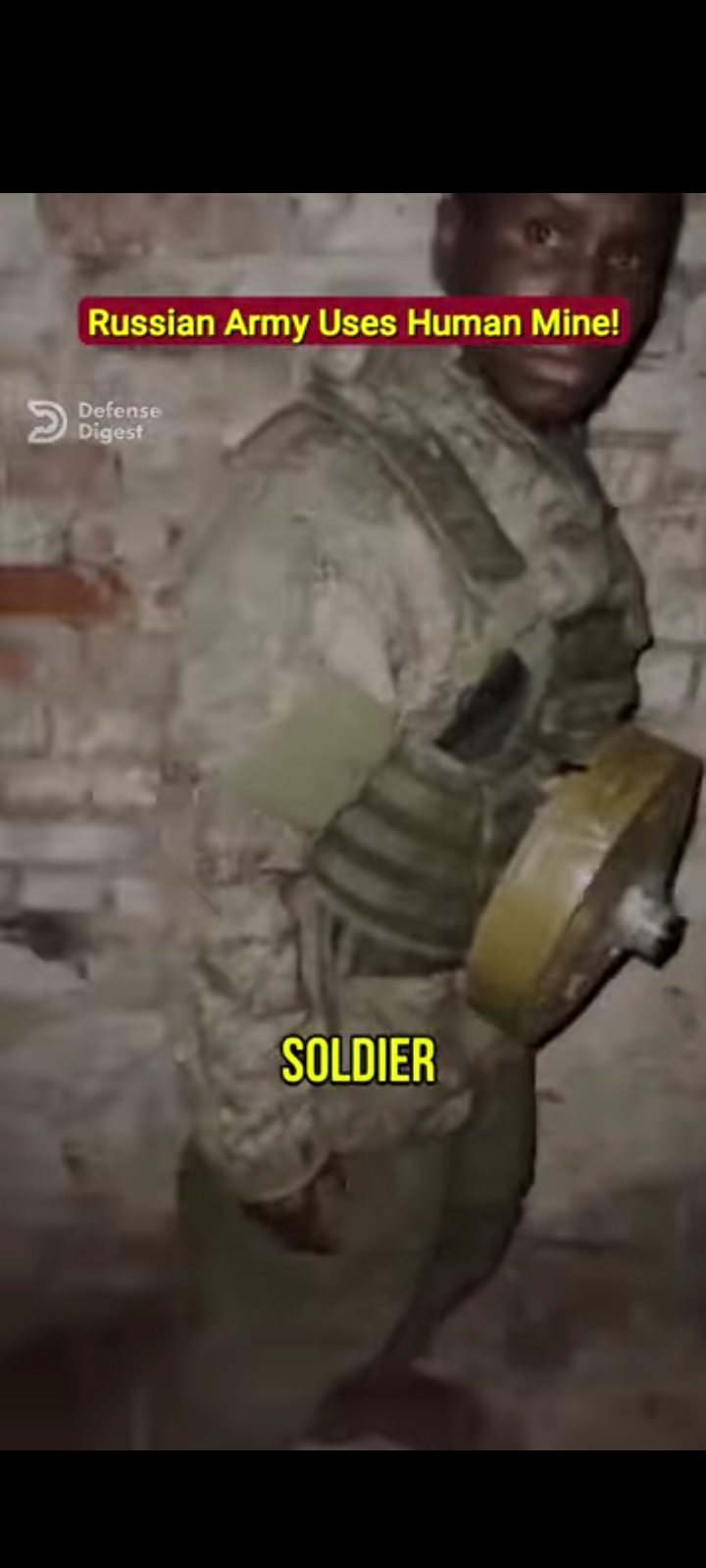
Jean Onana, from Cameroon, told Ukrainian interrogators he travelled to Russia for a job in a shampoo factory.
He had barely arrived in Moscow when he was detained along with 10 others from Cameroon, Zimbabwe and Ghana, and made to serve on the front line.
Mr Scherba also warned anyone swayed by offers of a hefty pay packet that they were unlikely to see any money.
He said there were “so many ways for Russians to trick you out of your money” and said life expectancy on the front line for new recruits was often only about 72 hours.
He said: “Just imagine how short the life expectancy for Africans is, because they care about foreigners much less than they care about their own citizens.
“Even if you survive this and even if there is any money at the end of it, it won’t be righteous money, you will be fighting on the side of the aggressor, on the side of a colonial power.”
Ukraine has been trying to grow its diplomatic clout in Africa but is running up against decades of skilful Russian influence-building.
At the start of Putin’s invasion, many nations on the continent refused to condemn the aggression, or vote against Russia in the United Nations.
Mr Scherba said that was because few in Africa had expected Ukraine to survive.
He said: “The whole world, not only Africa, thought that Ukraine didn’t stand a chance. The plan that the Russians had was to take Kyiv in three days and all of Ukraine within 15 days.”
Many on the continent thought the world was on the verge of a new Cold War and wanted to open doors to both sides, so did not want to condemn Russia.
Mr Scherba said Russian popularity on the continent was “not as much Russia’s strength as the West’s weakness”.
“The global wave of anti-Americanism and anti-Western mood is very much present on this continent,” he said.
“It’s part of reality and Russia is using this sentiment that blames the West and somehow tends to see Russia as innocent no matter what happens.”
